
Your AI Design Looks Amazing. Why It Might Fail at Print
Artificial intelligence (AI) has transformed the way businesses approach creativity, marketing, and graphic design. With just a few prompts, organizations can generate eye-catching graphics, promotional product concepts, event signage, and branded marketing materials in seconds. For busy marketing professionals managing multiple projects and tight deadlines, AI-generated designs can seem like the perfect solution for creating professional-looking artwork quickly and efficiently.
However, while AI has made design concepts more accessible, there’s an important distinction between generating an attractive image and creating artwork that’s ready for professional printing.
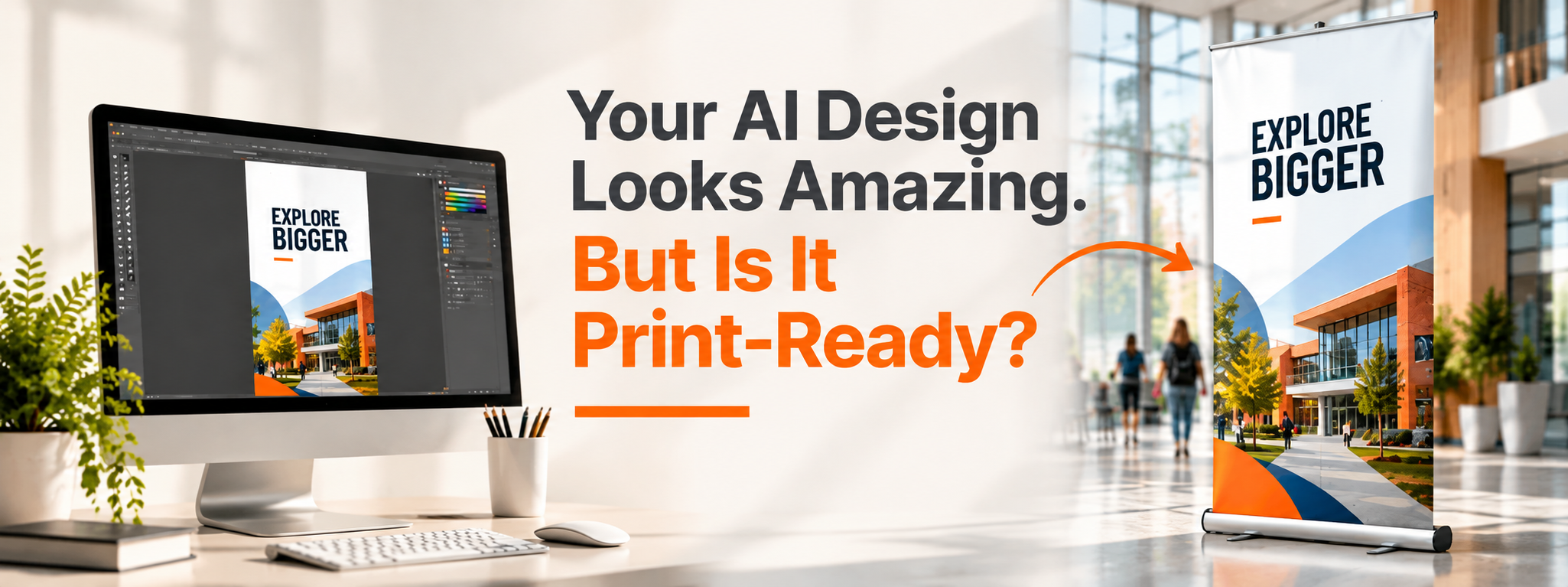
That AI-generated banner might look impressive on your computer screen, but what happens when you need it printed at 8 feet tall? Will your logo remain sharp? Are the colors accurate? Can the artwork be adjusted to meet your printer’s specifications?
Unfortunately, many AI-generated images aren’t immediately suitable for professional production. Although AI is an excellent tool for developing creative concepts, these images often require additional work from an experienced graphic designer before they can be used for signage, promotional products, apparel, or other branded materials.
In this article, we’ll explore why AI-generated designs aren’t always print-ready, the important role professional graphic designers play in the production process, and how businesses can effectively combine AI technology with creative expertise to achieve outstanding results.
Understand the Difference Between AI-Generated Images and Print-Ready Artwork
One of the most common misconceptions about AI-generated design is that an image that looks professional on a screen is automatically ready for printing.
In reality, professional printing requires specific file formats, resolutions, dimensions, and production specifications that many AI image-generation tools don’t automatically provide.
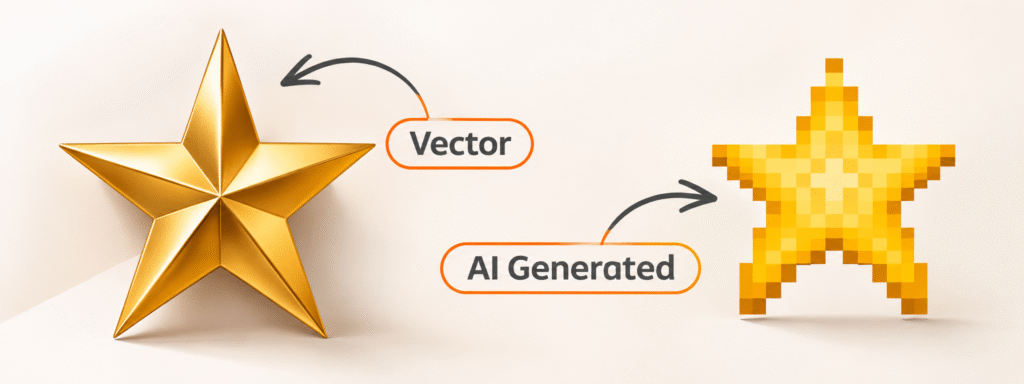
Most general-purpose AI image generators produce raster images, typically in formats such as JPEG or PNG. These images are composed of pixels, which means they have a fixed resolution. When enlarged beyond their intended size, they may lose clarity and appear blurry or pixelated.
For example, imagine your marketing team uses AI to create a beautiful design for a retractable banner at an upcoming university recruitment event. The graphic looks excellent in your presentation, but when you submit it for printing, your production team discovers that the image isn’t large enough to reproduce clearly.
This can create unexpected challenges, particularly when you’re working with event deadlines and limited production timelines.
Professional graphic designers understand how to evaluate image resolution, determine appropriate file specifications, and prepare artwork for its intended application.
Before sending any AI-generated artwork to print, it’s important to consider the final size, material, printing method, and resolution requirements. Taking these steps early can help prevent production delays and protect the quality of your finished marketing materials.
Recognize Why Vector Artwork Matters for Professional Printing
If you’ve ever ordered custom promotional products, embroidered apparel, or commercial signage, you’ve probably been asked to provide vector artwork.
But what exactly does that mean, and why is it important?
Unlike raster images, vector graphics are created using mathematical paths that allow designs to be resized without losing clarity. This makes vector artwork especially valuable for logos, typography, and graphics that need to appear consistently across different marketing materials.
For instance, your organization’s logo might need to be printed on a small promotional pen, embroidered onto employee uniforms, and displayed on a large outdoor banner. Having properly prepared vector artwork allows your design to maintain clean edges and consistent proportions across these applications.
While certain AI-powered design tools can generate vector graphics, many AI image generators produce flattened images that cannot be easily separated into editable elements.
This means a graphic designer may need to recreate the artwork, rebuild individual design elements, or convert appropriate portions into scalable vector graphics.
It’s also important to understand that simply changing a JPEG file into a PDF or SVG doesn’t automatically make the artwork a true vector design.
Working with an experienced creative team helps ensure that your files are properly constructed and meet the technical requirements of your project.
Identify Common Design Errors That AI Can Overlook
AI technology has made significant advancements in visual content creation, but it’s not always accurate when generating typography, logos, layouts, and detailed design elements.
For marketing professionals responsible for maintaining an organization’s brand standards, these imperfections can create challenges.
Common issues in AI-generated artwork include misspelled text, distorted lettering, inconsistent spacing, incorrect logos, and small design elements that may not reproduce properly when printed.
Imagine using AI to develop artwork for a corporate recognition event. The design features an impressive background, decorative elements, and elegant typography. However, upon closer inspection, several letters appear distorted, the organization’s logo has been altered, and the layout doesn’t follow established brand guidelines.
While these details might initially go unnoticed, they can become much more apparent when reproduced on large-format signage or distributed across hundreds of promotional items.
Professional graphic designers help identify and correct these issues before production begins.
Beyond correcting errors, designers ensure that typography is readable, layouts are balanced, brand elements are accurate, and the finished artwork communicates the intended message.
This attention to detail is particularly valuable for universities, corporations, government agencies, and nonprofit organizations where branding consistency and professional presentation are essential.
Prepare Your Designs for Different Printing Methods
Not all printing methods use the same artwork specifications.
A design created for a digital advertisement may require significant adjustments before it can be used for screen printing, embroidery, promotional products, or large-format signage.
For example, an AI-generated graphic featuring intricate details, gradients, and multiple colors might look excellent as a digital image. However, those same elements may be difficult to reproduce through embroidery or certain promotional product decoration methods.
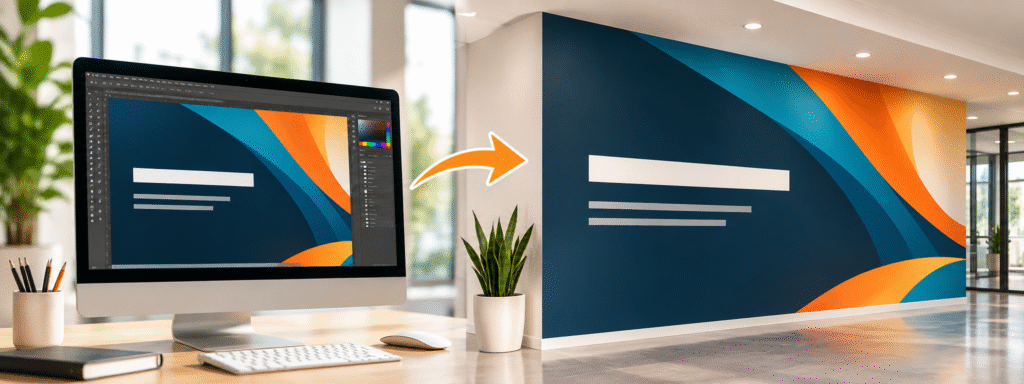
Similarly, artwork designed for a large event backdrop may require additional bleed, safe margins, or adjustments to accommodate the physical display hardware.
Colors are another important consideration.
Digital images are typically displayed using RGB color values, while many professional printing processes use CMYK or specialized spot colors. As a result, the colors displayed on your screen may not match the colors produced on your finished materials.
A professional graphic designer understands how to account for these differences and prepare artwork based on the specific production method.
By evaluating these requirements before production, organizations can reduce unnecessary revisions and improve the consistency of their branded materials.
Use AI as a Creative Tool, Not a Complete Design Solution
Despite its limitations, AI has an important place in the modern creative process.
When used strategically, AI can help marketing teams explore ideas, visualize concepts, and communicate creative direction more efficiently.
For example, a nonprofit organization planning its annual fundraising gala might use AI to explore different event themes, color palettes, and decorative concepts before presenting ideas to its leadership team.
Likewise, a university marketing department could generate preliminary concepts for campus signage, recruitment materials, or promotional merchandise to help communicate its vision.
These applications can make the early stages of creative development more efficient, allowing organizations to evaluate ideas before investing in final artwork.
However, generating the initial concept is only one part of the design process.
Professional designers bring valuable expertise in brand strategy, typography, composition, accessibility, production requirements, and visual communication.
They understand not only how to create an attractive design but also how to ensure that it serves a specific marketing objective.
At Big Hit Creative, we believe the most effective approach is to combine innovative technology with professional creative expertise.
AI can help generate ideas and inspiration, while experienced designers refine those concepts into polished, practical designs that support your organization’s marketing goals.
Avoid Costly Production Mistakes and Unexpected Delays
For marketing professionals managing multiple campaigns, events, and vendors, efficiency is essential.
An unexpected artwork issue can quickly impact project timelines, particularly when materials are needed for a conference, product launch, recruitment event, or promotional campaign.
Consider a company preparing for an upcoming trade show. Its marketing team generates an AI-designed banner and submits the image directly to production.
Unfortunately, the file doesn’t meet the printer’s requirements. The artwork must be recreated, delaying approval and potentially affecting the production schedule.
Depending on the circumstances, these delays may result in additional design expenses, rush production charges, or expedited shipping costs.
In some situations, artwork issues may not become apparent until the finished products arrive, creating the possibility of costly reprints.
Working with a professional design team early in the process helps minimize these risks.
Experienced designers can review artwork requirements, identify potential production challenges, and prepare files that align with vendor specifications.
This proactive approach can save valuable time and help marketing teams stay focused on their larger campaign objectives.
Partner With Professional Designers to Bring Your AI Concepts to Life
You don’t have to abandon an AI-generated design simply because it isn’t ready for printing.
In fact, an AI-generated concept can provide an excellent starting point for developing professional marketing materials.
Whether you’ve created a concept for branded merchandise, event signage, apparel, or an advertising campaign, an experienced creative team can help transform your vision into a finished design.
At Big Hit Creative, we work with organizations to develop creative solutions that support their branding and marketing objectives.
Our graphic design services can help businesses refine existing concepts, recreate artwork, develop scalable vector graphics, and prepare production-ready files for a variety of applications.
We also understand that different projects require different solutions.
A design intended for promotional drinkware may need a different approach than artwork created for vehicle graphics, corporate apparel, or large-format environmental signage.
By considering the intended application from the beginning, our team can help streamline the creative process and ensure that your artwork is prepared with production in mind.
For organizations managing multiple marketing initiatives, working with a creative partner also provides the benefit of consistent branding, personalized service, and knowledgeable guidance throughout the design and production process.
Bring Your Creative Vision to Life With Big Hit Creative
Artificial intelligence is changing the creative landscape, providing businesses with new opportunities to explore ideas and develop visual concepts. However, successful design requires more than generating an attractive image.
From understanding vector artwork and image resolution to preparing files for specific printing methods, professional graphic designers play an essential role in transforming creative concepts into effective marketing materials.
By combining AI technology with professional design expertise, organizations can take advantage of innovative creative tools while maintaining the quality, consistency, and attention to detail their brands deserve.
At Big Hit Creative, we’re passionate about helping organizations turn creative ideas into impactful branding solutions. Whether you have an AI-generated design that needs to be recreated, an existing graphic that requires professional refinement, or an entirely new project in mind, our team is here to help.
Your AI-generated design might be the beginning of something great. Let our team help you bring it to life.
Ready to get started? Book a 15-minute design consultation with Big Hit Creative to discuss your next project, explore your options, and discover how our creative team can help turn your vision into professional, production-ready artwork.
You can also contact Big Hit Creative at 972.850.7312 or info@bighitcreative.com, or visit bighitcreative.com to learn more about our graphic design, branding, signage, and promotional product services.
 Previous Post


