
The Missing Layer Between Brand and Experience: Why Recognition Alone Is Not Enough
Most organizations believe their brand is working.
The logo is polished.
The colors are consistent.
The messaging sounds professional.
The campaigns are active.
The website looks good.
The social media content is being published.
From the outside, everything appears aligned.
But somewhere between what the brand promises and what the customer actually experiences, something begins to break.
Leads engage, but they do not convert.
Opportunities begin, but they do not move forward.
Prospects show interest, but momentum fades.
Customers ask questions, but the follow-up feels inconsistent.
Teams are working hard, but the experience still feels disconnected.
This is where many organizations misdiagnose the problem.
They assume they need more visibility, more content, more ads, more promotional items, or more marketing activity. And sometimes, those things help. But visibility alone does not guarantee trust. Recognition alone does not create confidence. A strong first impression does not matter much if the experience that follows does not reinforce it.
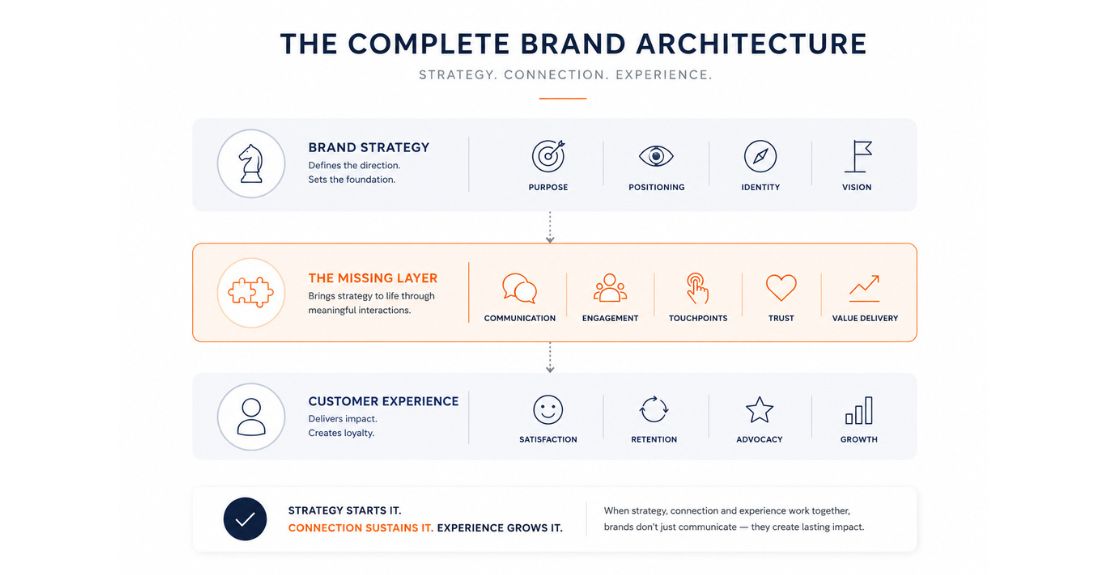
That is the missing layer between brand and experience.
At Big Hit Creative, we often see organizations invest heavily in how their brand looks, but not always in how their brand is carried through the customer journey. Visual branding builds recognition, but effective communication reinforces trust. When those two pieces are not connected, the brand may attract attention, but the experience may fail to convert that attention into action.
Brand Is Only the Beginning
A strong brand is important. There is no question about that.
Your logo, colors, typography, messaging, signage, apparel, promotional products, website, email graphics, and campaign materials all shape how people see your organization. These elements create familiarity. They help your audience recognize you. They give your organization a professional presence and help establish credibility before a conversation even begins.
But branding is not just what people see.
Branding is also what people experience.
A prospect may first notice your organization through an ad, a social post, an event booth, a promotional product, or a referral. That first impression matters because it creates an expectation. However, the real test begins after that first moment of interest.
What happens when they submit a form?
How quickly does someone follow up?
Is the next step clear?
Does the communication feel organized?
Does the interaction match the quality of the brand they first saw?
Does the experience make them feel confident, or does it create hesitation?
This is where brand moves from appearance to behavior.
A beautifully designed campaign can open the door, but the experience determines whether someone walks through it.
The Gap Between Recognition and Trust
Many organizations focus on recognition because it is visible and easier to measure. You can see the logo. You can approve the flyer. You can review the website. You can count impressions, clicks, views, and email opens.
Trust is different.
Trust is built through consistency over time. It is created when the customer’s experience matches the expectation your brand created.
If your brand communicates professionalism, your follow-up should feel professional.
If your brand promises responsiveness, your communication should be timely.
If your brand presents itself as organized, your process should feel clear.
If your brand positions your organization as helpful, your customer interactions should make people feel supported.
When these elements align, trust grows naturally.
When they do not align, people may not always complain. They may not tell you the follow-up felt slow, the process felt unclear, or the communication felt disconnected. Instead, they hesitate. They delay. They compare other options. They stop responding.
That hesitation is often the hidden cost of a disconnected brand experience.
Why More Marketing Does Not Always Fix the Problem
When leads slow down or conversions feel inconsistent, many teams assume they need more marketing activity.
More emails.
More ads.
More posts.
More flyers.
More promotional products.
More campaigns.
Marketing activity matters, but more activity does not automatically fix a broken experience.
If the process after engagement is unclear, more leads may simply create more missed opportunities. If follow-up depends entirely on individual effort, more inquiries may lead to more inconsistency. If communication is not structured, more visibility may expose more gaps.
This is why organizations need to look beyond the campaign itself.
A campaign should not only generate attention. It should connect to a clear pathway. That pathway should guide the audience from awareness to interest, from interest to action, and from action to continued engagement.
Without that structure, even a strong campaign can lose momentum.
For example, a company may invest in a trade show booth, branded merchandise, printed materials, and a strong visual presentation. The booth may look great. The giveaways may attract attention. The team may have meaningful conversations. But if there is no clear follow-up system after the event, those conversations can quickly go cold.
The issue was not the booth.
The issue was not the branding.
The issue was not the promotional product.
The issue was the missing layer between the marketing moment and the customer experience that followed.
The Missing Layer Is Structure
The missing layer between brand and experience is structure.
It is the system that connects what your brand promises to how your organization actually responds.
This structure does not belong only to marketing. It does not belong only to sales. It does not belong only to operations. That is part of why it often gets overlooked. It sits between departments, which means it can easily go unmanaged.
But when this layer is missing, the signs are usually easy to recognize.
Follow-up depends on who received the inquiry.
Customer communication varies from person to person.
Campaigns are launched without a clear next step.
Leads are captured but not nurtured consistently.
Teams are busy, but opportunities still stall.
The customer experience changes depending on the channel.
These issues are not always caused by a lack of effort. In many cases, the team is working hard. The problem is that the experience is not being guided by a defined system.
Effort is important, but effort without structure creates variability.
A strong brand experience needs repeatable pathways, clear ownership, consistent messaging, and tools that help the organization respond with intention.
Communication Is Where the Brand Becomes Real
Communication is one of the most important parts of the brand experience because it is where the customer begins to decide whether they trust you.
Every email, phone call, form response, proposal, follow-up message, appointment reminder, and post-event touchpoint communicates something about your organization.
It tells people whether you are organized.
It tells people whether you are responsive.
It tells people whether you understand their needs.
It tells people whether you can guide them clearly.
It tells people whether they should feel confident moving forward.
This is why communication cannot be treated as an afterthought.
Visual branding may create recognition, but communication reinforces trust. The two should work together. Your visuals introduce the brand. Your communication carries the brand. Your experience proves the brand.
For busy marketing and branding professionals, this is especially important. Many teams are managing multiple campaigns, departments, timelines, and vendors at once. They do not have time for disconnected processes or unclear handoffs. They need marketing systems that not only look good, but also function well.
That is where a more integrated approach becomes valuable.
What a Strong Brand Experience Looks Like
A strong brand experience is not accidental. It is designed.
Organizations that close the gap between brand and experience are intentional about the full customer journey. They do not stop at the visual campaign. They consider what happens before, during, and after someone engages.
A strong brand experience may include:
Clear campaign messaging that sets the right expectation.
Consistent visuals across digital, print, apparel, signage, and promotional materials.
A defined process for capturing leads or inquiries.
Automated or structured follow-up to keep momentum moving.
Sales and marketing alignment around next steps.
Professional communication templates that match the brand voice.
Internal clarity on who owns each part of the process.
Useful branded touchpoints that support the relationship after the first interaction.
This is where marketing becomes more than promotion. It becomes a complete experience.
For example, a university planning a recruitment campaign may need more than printed brochures and event signage. They may also need branded follow-up emails, student engagement materials, promotional giveaways, digital ads, landing pages, and a clear communication flow after each inquiry.
A nonprofit hosting a donor event may need more than event graphics and branded gifts. They may also need pre-event communication, donor recognition materials, post-event follow-up, impact storytelling, and a system for keeping donors engaged after the event.
A company launching an employee appreciation program may need more than branded merchandise. They may need messaging, packaging, recognition materials, internal communication, and a repeatable process for making employees feel valued.
In each case, the brand is not limited to the design. The brand is experienced through every touchpoint.
Why Consistency Matters More as You Grow
In smaller organizations, brand experience is often easier to manage because fewer people are involved. One person may handle the inquiry, the follow-up, the proposal, and the relationship. The experience feels personal because it is managed closely.
But as organizations grow, consistency becomes harder.
More team members get involved.
More channels are added.
More campaigns are launched.
More customers engage.
More departments touch the experience.
Without a clear structure, the brand experience can become inconsistent even when everyone has good intentions.
One customer may receive a quick response, while another waits. One department may use updated messaging, while another uses outdated materials. One campaign may have a strong follow-up process, while another ends after the first touchpoint.
These inconsistencies weaken trust over time.
That is why growing organizations need systems that help brand standards move beyond the logo file and into the customer journey. Brand consistency should not only apply to colors and fonts. It should apply to communication, follow-up, service, and execution.
How to Begin Closing the Gap
Closing the gap between brand and experience does not always require a complete overhaul. Often, it starts with asking better questions.
Where are people first encountering your brand?
What expectation does that first interaction create?
What happens immediately after someone shows interest?
Is the follow-up process clear and consistent?
Do your sales, marketing, and operations teams understand the same next steps?
Are your branded materials connected to a larger campaign strategy?
Are customers receiving the same level of professionalism across every channel?
Where does momentum most often slow down?
These questions can help reveal where the experience may be weakening the brand.
Once those gaps are identified, the next step is to build structure around them. That may include improving campaign planning, creating communication templates, developing branded follow-up sequences, updating customer touchpoints, building better internal workflows, or connecting marketing materials to a clearer conversion pathway.
The goal is not simply to do more. The goal is to make each touchpoint work harder together.
Brand Recognition Gets Attention. Experience Drives Action.
Brand recognition is valuable because it helps people notice you. But experience is what helps them believe you.
A strong visual identity may make your organization look credible. A strong experience confirms that credibility.
This distinction matters because today’s audiences are paying attention to more than what you say. They are evaluating how you make them feel throughout the process. They notice whether communication is clear. They notice whether the process is easy. They notice whether your team follows through. They notice whether the experience matches the promise.
The most effective organizations understand that branding and experience are not separate efforts. They are connected.
Your logo may help people remember you.
Your communication helps them trust you.
Your experience helps them choose you.
That is the missing layer many organizations need to strengthen.
Big Hit Creative Helps Connect the Pieces
At Big Hit Creative, we believe effective marketing should not stop at visibility. It should help organizations create meaningful, consistent, and results-driven brand experiences.
That means looking at the full picture, from branding and graphic design to promotional products, apparel, print, signage, digital marketing, media production, web design, campaign support, and communication tools like ConnectXL.
When these elements work together, your brand becomes more than a visual identity. It becomes a system that helps your audience recognize you, trust you, and take action.
Whether you are planning a campaign, preparing for an event, improving customer communication, launching an internal program, or trying to create more consistent brand engagement, the goal should be the same: every touchpoint should reinforce the trust your brand is trying to build.
Because the gap between brand and experience is where momentum is often lost.
And when that gap is closed, your marketing becomes more connected, your communication becomes more consistent, and your audience has a clearer reason to move forward.
 Previous Post
 Next Post