How Continuous Website Optimization Builds Brand Recognition
Launching a new website often feels like a major accomplishment.
The design is approved. The content is uploaded. The pages are tested. The site goes live.
For a moment, everything feels polished, current, and aligned with the brand.
Then business moves forward.
Services change. Locations move. Hours are updated. New campaigns launch. Search behavior shifts. Customers begin finding your business in more places than just your website.
That is why continuous website optimization matters.
A website is not a one-time project. It is part of a larger digital presence that includes search engines, maps, local directories, review platforms, social profiles, and business listings. When all of those pieces are accurate and consistent, your brand feels trustworthy. When they are not, customers may hesitate before they ever contact you.
Long-term brand recognition is built through repeated, reliable experiences. Your website plays an important role, but so does every place your business appears online.
For many organizations, the website is still the center of the digital experience. It explains who you are, what you offer, where you are located, and how people can take the next step.
But customers do not always start there.
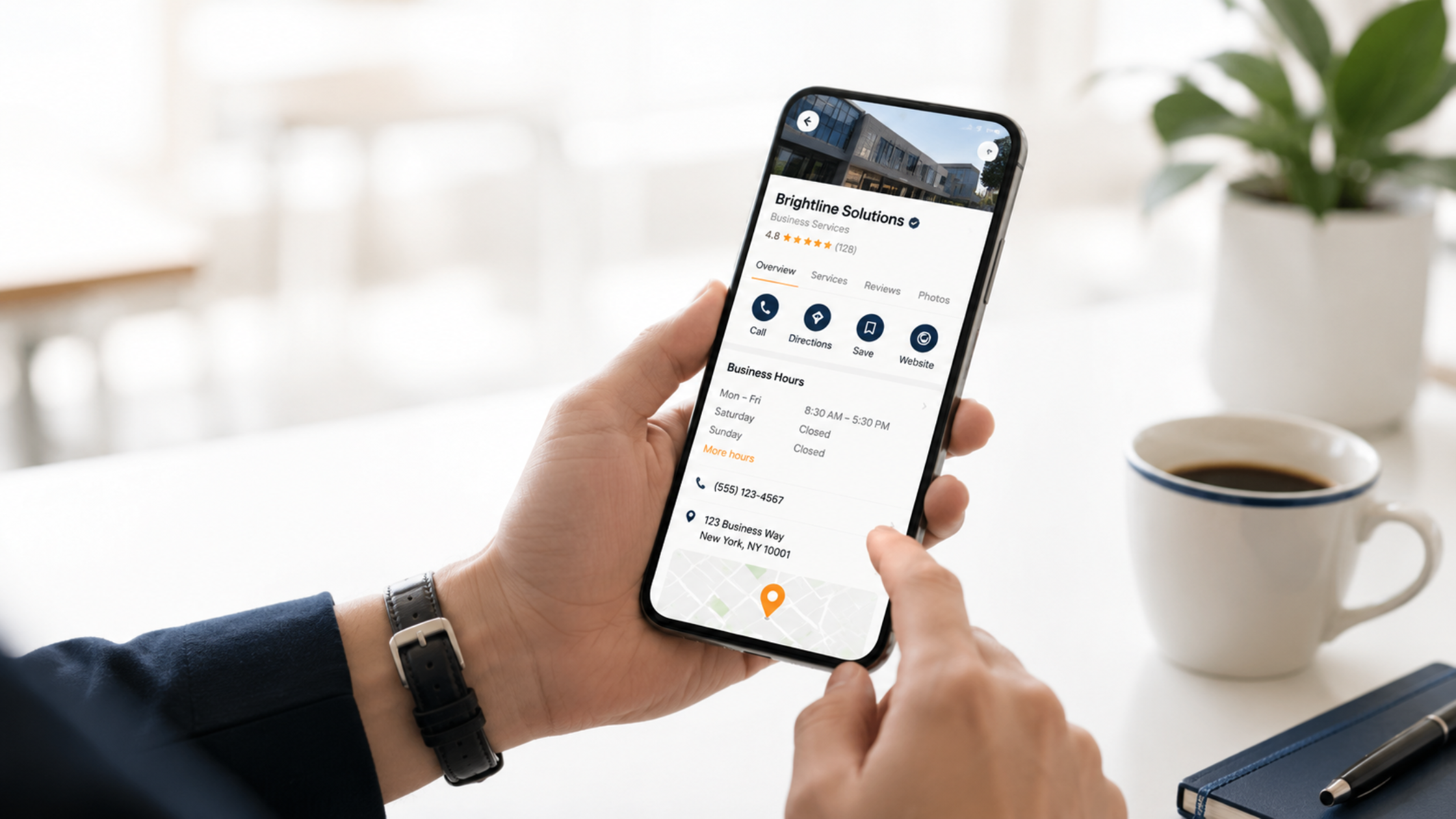
Before they visit your website, they may find your business through Google Search, Google Maps, Apple Maps, Bing, Facebook, Yelp, a local directory, a review platform, a GPS app, or even a voice search result.
They may check your hours before driving over.
They may tap your phone number from a map listing.
They may compare nearby options.
They may read reviews before clicking your website.
They may look for directions without ever visiting your homepage.
That means your digital first impression may happen outside your website.
If your listing shows the wrong hours, an outdated phone number, an old address, or a broken website link, the customer experience is already damaged. The problem may seem small internally, but to a customer, inaccurate information can make the business feel disorganized or unreliable.
A strong website optimization strategy should not stop at the website. It should also consider how accurately and consistently your business appears across the web
Why Location Visibility Matters for Brand Recognition
Brand recognition is not only about logos, colors, and taglines.
It is also about consistency.
When someone sees your business in a search result, map listing, social profile, directory, and website, the experience should feel connected. The name should match. The phone number should be correct. The hours should be current. The website link should work. The service description should make sense.
These details help customers trust what they are seeing.
When information is inconsistent, the opposite happens.
A customer might wonder:
Is this business still open?
Is this the right location?
Are these hours accurate?
Will someone answer if I call?
Is this company active and professional?
Those doubts can weaken brand perception.
According to Rio SEO’s 2025 local search research, 84% of consumers search for local businesses online daily, and 53% say inaccurate listings would drive them away. That tells us something important: local listing accuracy is not just a technical detail. It directly affects whether people trust the information enough to take action.
For organizations with multiple locations, branches, campuses, clinics, showrooms, offices, or service areas, this becomes even more important. The more places your brand appears, the easier it is for information to become outdated, duplicated, or inconsistent.
Continuous website optimization helps protect your brand from that kind of confusion.
Your Website Is Only One Part of the Customer Journey
The Hidden Cost of Inaccurate Business Listings
Most businesses do not set out to have inaccurate information online.
It usually happens slowly.
A location changes its hours.
A phone number is updated.
A service area expands.
A temporary holiday schedule stays online too long.
An old listing remains active.
A directory pulls outdated information from another source.
Over time, small inconsistencies spread across the web.
The issue is that customers do not know which version is correct. They only know that something feels off.
For example, imagine a customer searches for your business on their phone. One listing says you close at 5:00 PM. Another says 6:00 PM. Your website says 5:30 PM. A directory has an old phone number. A map listing has outdated photos.
That customer may not take the time to investigate. They may simply choose another business with clearer information.
This is where digital presence management becomes part of brand protection.
It helps businesses identify where their information appears, where it may be incorrect, and where updates are needed. It also helps keep your website, local listings, map profiles, directories, and search results working together instead of creating friction.
Your website may be the destination, but your listings often create the path that leads people there.
Website Performance Still Shapes the Experience
Location visibility is important, but the website still has to perform once people arrive.
If a customer clicks from a listing to your website and the page loads slowly, looks outdated, or is difficult to use on mobile, the brand experience weakens.
Google has reported that 53% of mobile site visits are abandoned if a page takes longer than three seconds to load. For marketing teams investing in search visibility, paid ads, email campaigns, social media, signage, events, and promotional campaigns, that kind of friction can quietly reduce results.
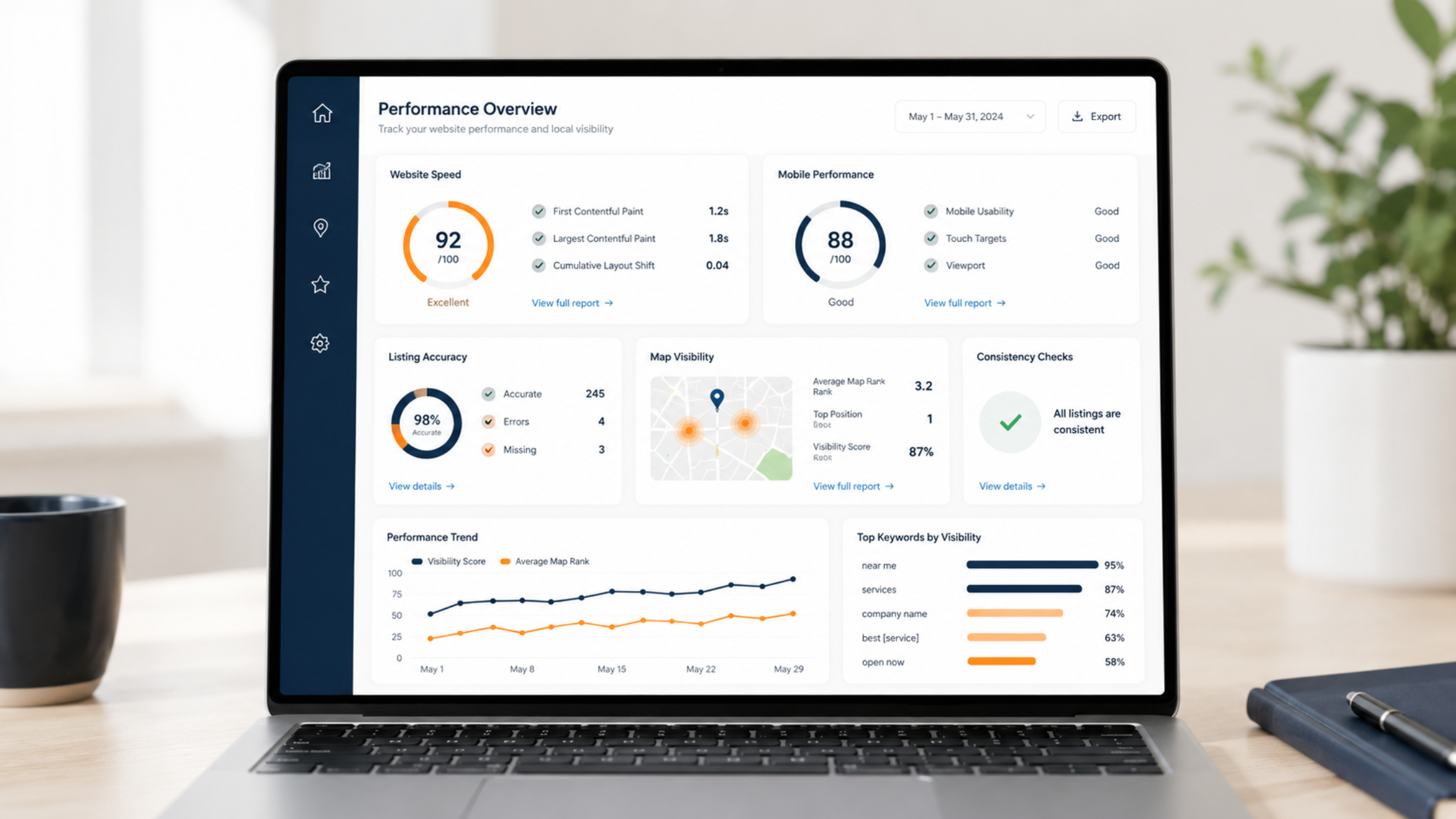
Website performance optimization helps make sure the experience feels smooth, professional, and easy to navigate.
This can include:
- Improving page speed
- Reviewing mobile usability
- Updating outdated content
- Checking forms and calls to action
- Fixing broken links
- Reviewing landing pages
- Making sure key services are easy to find
- Aligning website messaging with current campaigns
These improvements do not always require a full redesign. In many cases, small ongoing updates can make a meaningful difference.
The goal is not to constantly rebuild your website. The goal is to keep it working as your business grows
Consistency Builds Trust Over Time
Customers remember brands that show up clearly and reliably.
That consistency should extend across every touchpoint.
Your website, search listings, map profiles, social pages, review platforms, printed materials, email campaigns, and digital ads should all support the same brand story.
When they do, the business feels more established and easier to trust.
When they do not, the experience feels fragmented.
This matters because brand recognition is built through repetition. Each interaction either strengthens the impression or weakens it.
A customer may first see your name in a local search result. Later, they may visit your website. A few days after that, they may see a social post, receive an email, or notice your signage at an event. If each interaction feels connected, your brand becomes easier to remember.
Research cited by Forbes from Lucidpress found that consistent brand presentation across platforms can increase revenue by up to 23%. While every organization is different, the principle is clear: consistency is not just a design preference. It is part of how customers build confidence in your brand.
That is why ongoing website improvement should also include the places where customers discover your business before they reach your site.
Why “Set It and Forget It” Does Not Work Anymore
A website can look fine and still be underperforming.
A business listing can exist and still be inaccurate.
A map profile can appear online and still create confusion.
That is why the “set it and forget it” approach does not work anymore.
Digital presence changes constantly. Search platforms update. Directories pull information from different sources. Customer reviews appear. Competitors improve their listings. Business details change. Campaigns evolve. New services are added.
If no one is reviewing these touchpoints regularly, the brand experience can become outdated without anyone noticing
This is especially true for busy marketing teams.
Most teams are already managing multiple projects at once. They are planning campaigns, coordinating vendors, supporting sales teams, preparing events, ordering branded materials, updating social channels, and responding to internal requests.
Website maintenance and management can easily become a lower priority until something breaks.
But the better approach is to identify issues before they cost attention, trust, or leads.
What a Website and Location Visibility Review Can Reveal
A proper review can help uncover the gaps that are easy to miss from inside the organization.
It may reveal that your website is not matching your current services. It may show that important pages are loading too slowly. It may uncover broken links, outdated photos, unclear calls to action, or inconsistent messaging.
It may also reveal listing issues across search engines, maps, directories, and local platforms.
For example:
- Your address may be formatted differently across platforms
- Your business hours may not match your website
- Your phone number may be outdated in one directory
- A duplicate listing may be confusing customers
- Your website link may be missing from a map result
- Your business description may not reflect your current services
- Your photos may look outdated compared to your current brand
- Your locations may not be equally visible across search platforms
These issues may seem minor on their own. Together, they can create a weaker customer experience.
A website and location visibility review gives your team a clearer picture of how your business appears online and where improvements may be needed.
It does not mean everything has to be fixed at once. It simply helps you understand where your digital presence stands today.
Ready to See How Your Business Shows Up Online?
Your website is one of the most important parts of your brand, but it is not the only place customers find you.
They may discover your business through search, maps, directories, social platforms, review sites, and local listings before they ever reach your homepage. If those details are accurate and consistent, your brand feels easier to trust. If they are outdated or disconnected, customers may hesitate or move on.
That is why continuous website optimization should include more than website performance. It should also include location visibility, business information accuracy, and digital presence consistency.
At Big Hit Creative, we understand that your website, listings, branding, campaigns, and customer experience all work together. A strong digital presence does not happen from one launch. It is built through ongoing review, thoughtful updates, and consistent attention to the details that shape how people see your brand.
 Previous Post
 Next Post